People, place and the unpredictable business of portrait photography on the Welsh coast.
Changing Tides: Six portraits, a Welsh winter & one very photogenic cow.
Sometimes, a photography commission comes along that is about much more than taking a decent picture. It’s about people, place, and the stories that connect them.
This commission for Tir Canol was exactly that. The project involved capturing six portraits from the Dyfi Valley for Changing Tides, an ecology campaign handbook exploring the relationship between people, nature and the changing landscape around them.
The Dyfi Valley is a remarkable place. From the estuary and salt marshes to the
farmland, beaches and communities dotted along the coast, the landscape is constantly changing. But it isn’t just a beautiful backdrop. It’s a living,
working environment, shaped by the people who call it home and whose lives are closely connected to the environment.
The aim was to put the people who make the Dyfi Valley what it is at the heart of the story, capturing their individual connections to the landscape, their experiences and their perspectives on how it’s changing.
You can find the portraits and read the interviews on the Changing Tides website.
Changing Tides: Six portraits, a Welsh winter and one very photogenic cow
People, place and the unpredictable business of portrait photography on the Welsh coast.
Sometimes, a photography commission comes along that is about much more than taking a decent picture. It’s about people, place, and the stories that connect them. This commission for Tir Canol was exactly that.
The project involved capturing six portraits from the Dyfi Valley for Changing Tides, an ecology campaign handbook exploring the relationship between people, nature and the changing landscape around them.
The Dyfi Valley is a remarkable place. From the estuary and salt marshes to the farmland, beaches and communities dotted along the coast, the landscape is constantly changing. But it isn’t just a beautiful backdrop. It’s a living, working environment, shaped by the people who call it home and whose lives are closely connected to the environment.
The aim was to put the people who make the Dyfi Valley what it is at the heart of the story, capturing their individual connections to the landscape, their experiences and their perspectives on how it’s changing.
You can find the portraits and read the interviews on the Changing Tides website.
For me, the commission was a chance to combine portrait photography with the things I love about working on location: meeting interesting people, discovering new places and finding ways to bring a little of the surrounding environment into each photograph.
There was just one small complication.
The photographs were taken in late November in Mid-Wales.
If you’ve spent any time on the Welsh coast, you’ll know that the weather can be a little unpredictable. And by a little unpredictable, I mean that one minute you’re admiring the view and the next you’re wondering whether your lighting equipment is about to make an unscheduled trip across the landscape.
Over the course of the project, I encountered beautiful sunsets, stormy skies, gale-force winds, Monsoon-like rain & some wonderfully generous people — and a cow that briefly appeared to understand fashion photography better than I do.
Here’s how it all unfolded.
Caroline Stockford: Chasing the last of the light
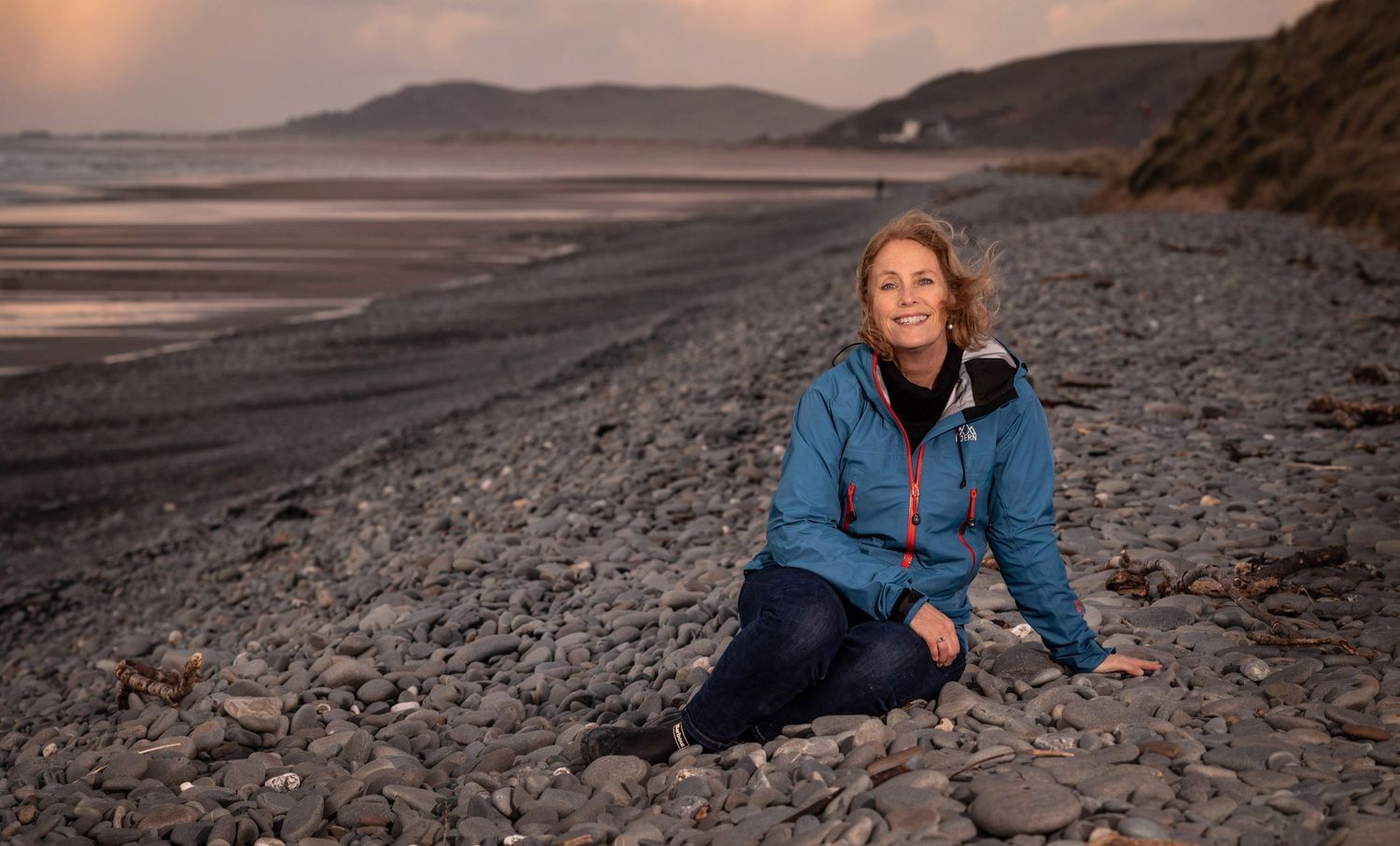
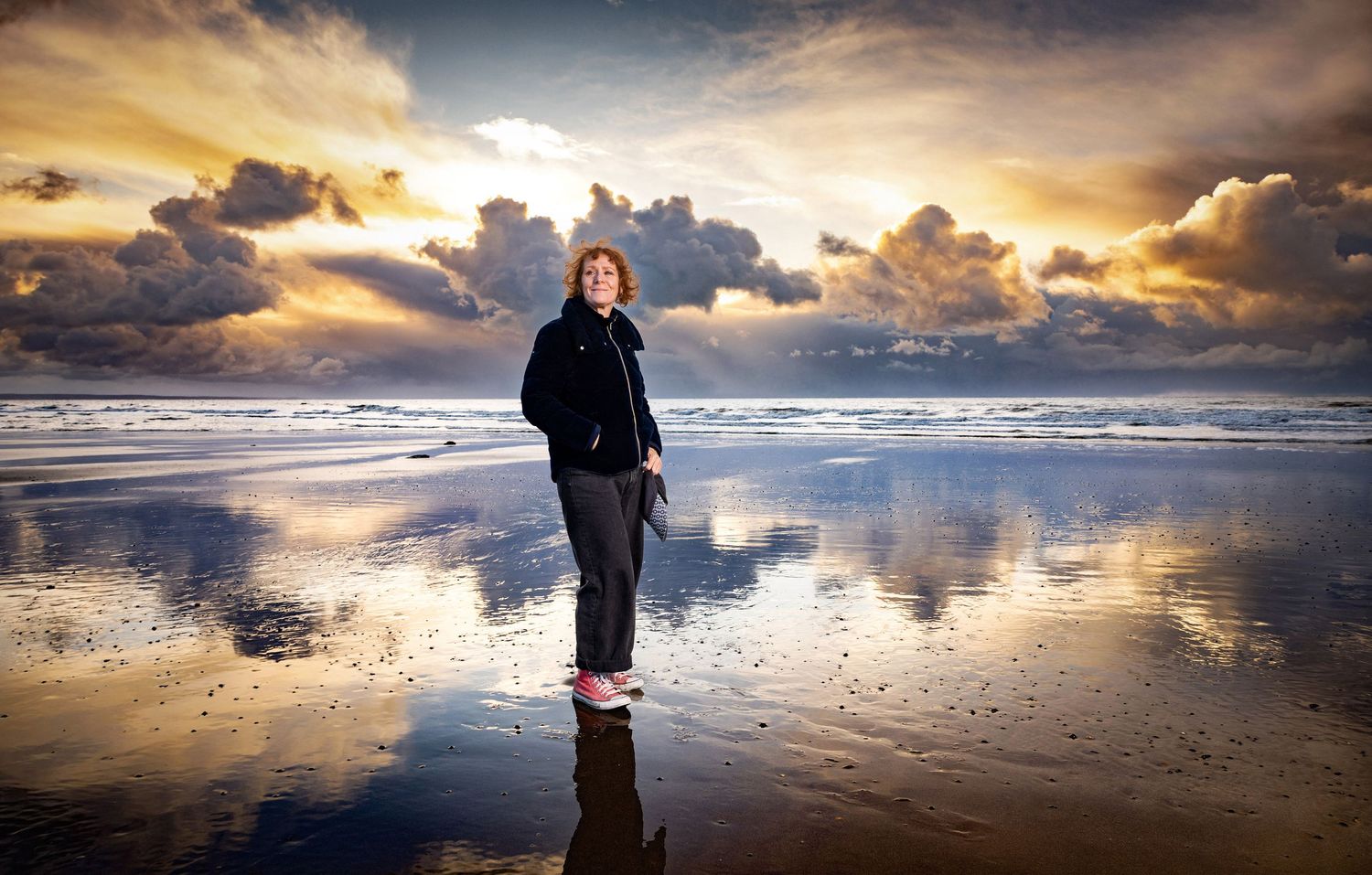
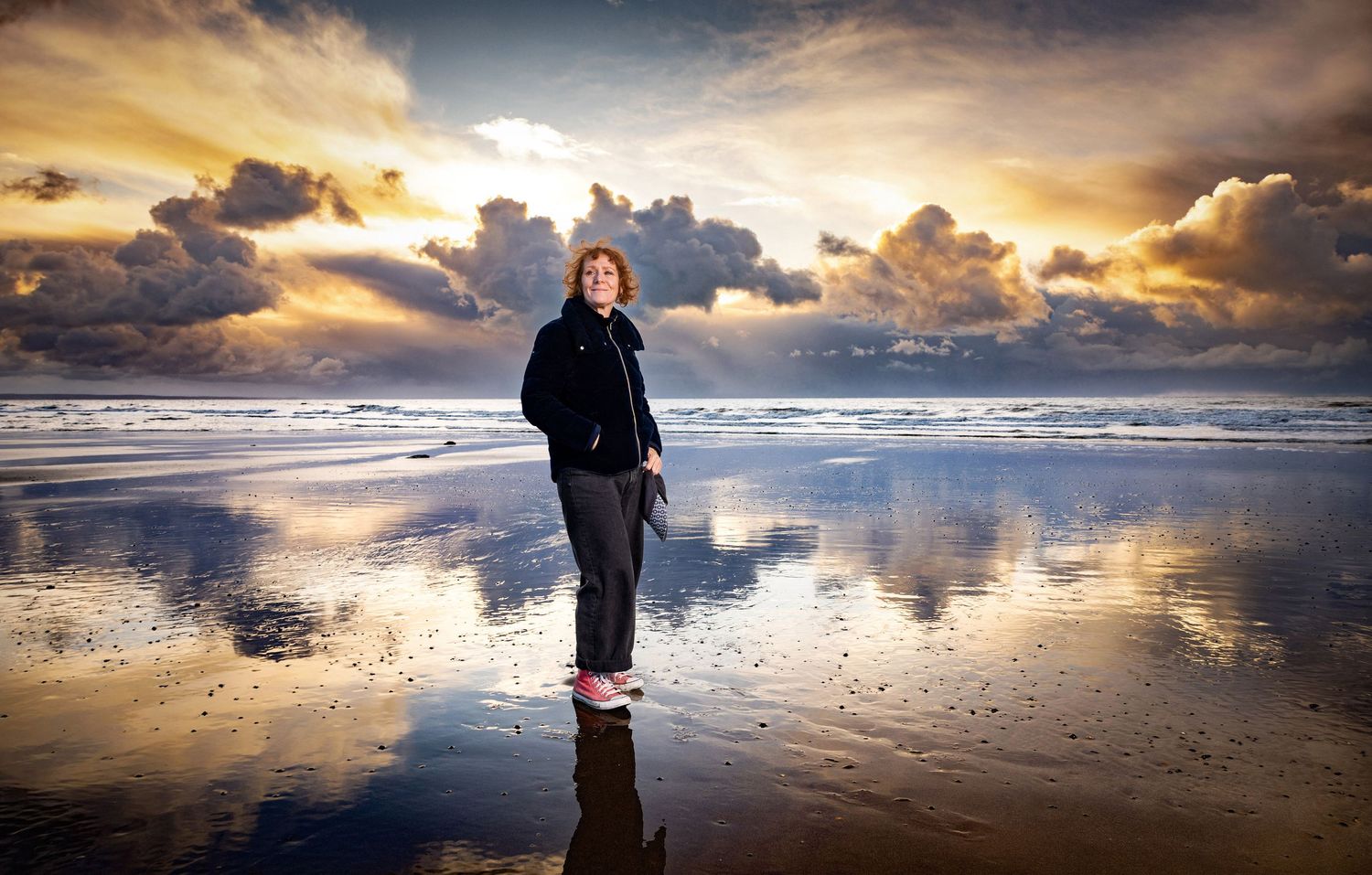
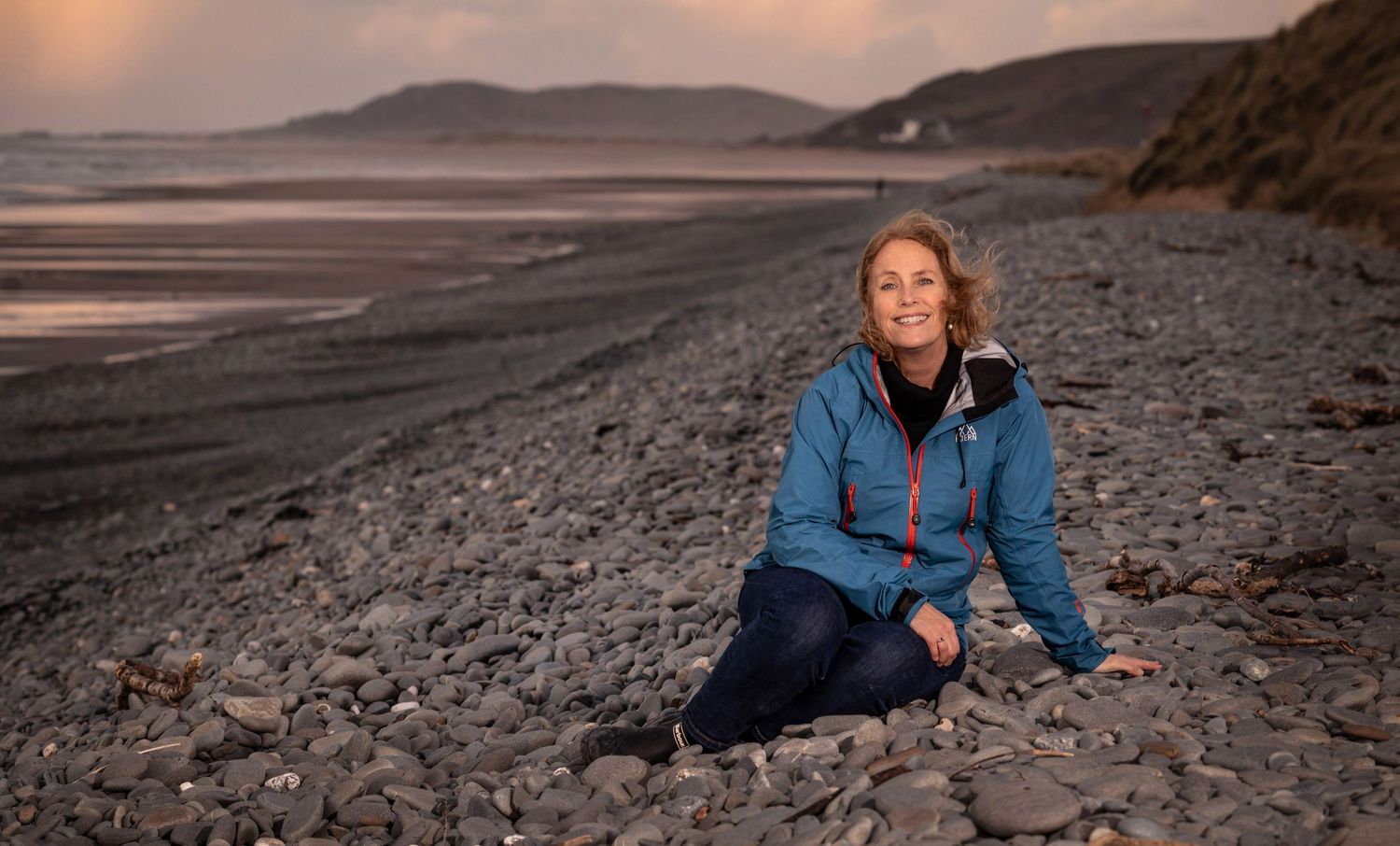
My first portrait was of Caroline Stockford, a poet and activist based in Borth.
We met on the beach as the tide was receding and the sun was beginning to set. It was one of those occasions when the landscape seems to do half the work for you.
As the water pulled back, it left a thin glaze across the wet sand, reflecting the colours of the sunset. This gave me a beautiful, almost mirror-like surface to work with, adding depth and atmosphere to the background without distracting from Caroline herself.
I wanted the photograph to feel connected to the place, rather than simply being a portrait taken outdoors. The beach, the changing light and the vastness of the estuary all helped create that sense of connection.
Fortunately, everything came together beautifully. The light was doing exactly what I wanted, the setting was spectacular and Caroline was a pleasure to photograph.
It was a lovely way to begin the project and, perhaps, a slightly misleading introduction to the weather I would encounter during the rest of the shoot!
Charlie, Mikatcha and a battle with the elements
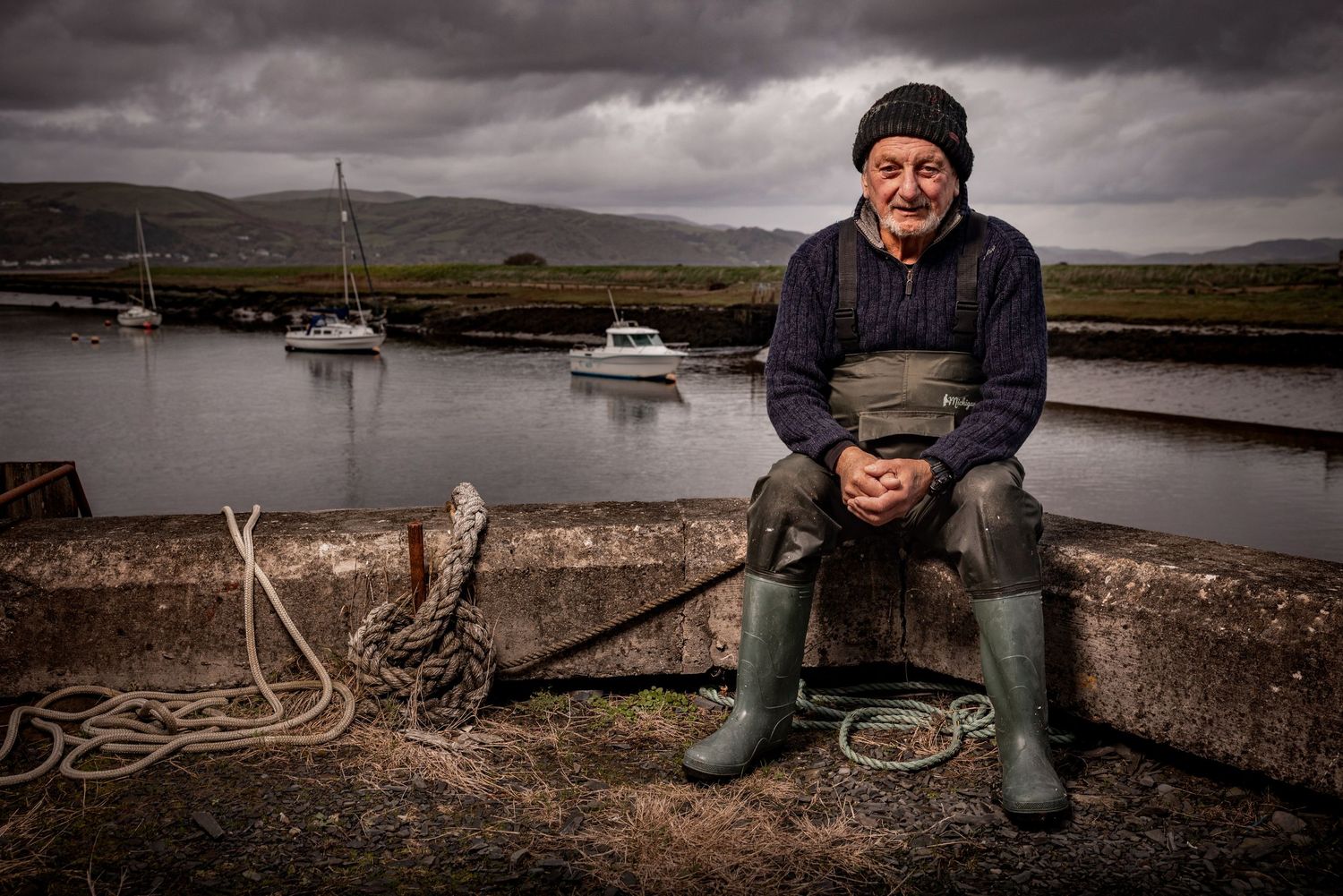
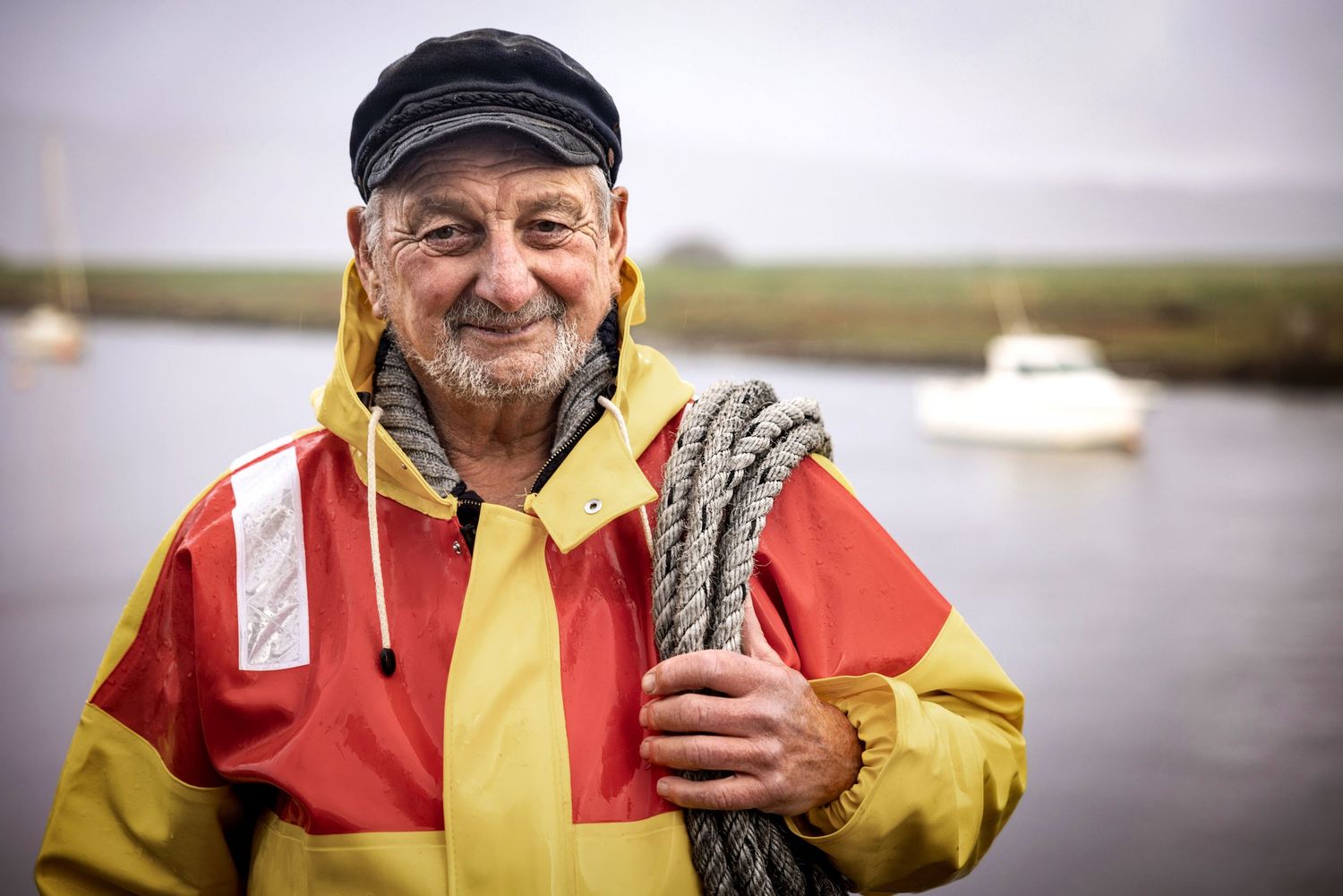
Next up was Charlie, a fisherman at Ynyslas boatyard, and his boat, Mikatcha.
Charlie had taken Mikatcha out of the water for the winter and was busy cleaning her down, ready to put her away for the season. It was a wonderfully authentic setting for a portrait, surrounded by the boats, equipment and unmistakable atmosphere of a working boatyard.
There was just one slight complication: the weather.
On my first visit, the conditions were so wild that any plans for an outdoor portrait quickly went out of the window. We retreated inside the boat, where I managed to capture a few images out of the worst of it. Even Charlie, sporting some impressive waterproofs, wasn't keen on venturing outside for a photograph. And if someone who makes their living around the sea decides the weather is a bit too much, it's probably worth paying attention!
I was keen to make the most of the dramatic skies, though, so we arranged a second session.
Thankfully, the weather had eased a little by the time I returned. It was still wet, but nothing like the previous stormy encounter, which meant we could finally get outside and work on a different kind of portrait. This time, I was able to photograph Charlie in a more relaxed way, out of his brightly coloured waterproofs, with Mikatcha and the boatyard providing the setting.
The storm clouds were still a welcome part of the scene, but the conditions were a little more forgiving. That was important because I was using off-camera lighting, and wind, rain and electricity aren't exactly the best of friends. Dramatic skies are one thing; risking several thousand pounds' worth of camera and lighting equipment is quite another.
It's a balancing act between patience, timing and knowing when to push your luck. You want enough atmosphere to make the photograph sing, without allowing the elements to dismantle your entire setup.
Photographing Charlie alongside Mikatcha, ready for her winter rest, felt particularly fitting for a project about a changing coastline and the people whose lives are tied to it. The boatyard offered a glimpse of the practical realities of life on the coast — work shaped by seasons, weather and the rhythms of the sea.
In the end, two visits gave me two different perspectives: an initial glimpse of Charlie sheltering from the storm aboard his boat, followed by a more relaxed portrait outside when the weather finally gave us a little breathing room.
It was a useful reminder that sometimes the best approach is simply to come back another day. Although, on the Welsh coast in late November, you can never be entirely sure what sort of welcome you'll receive.
Eluned: A portrait in a gale
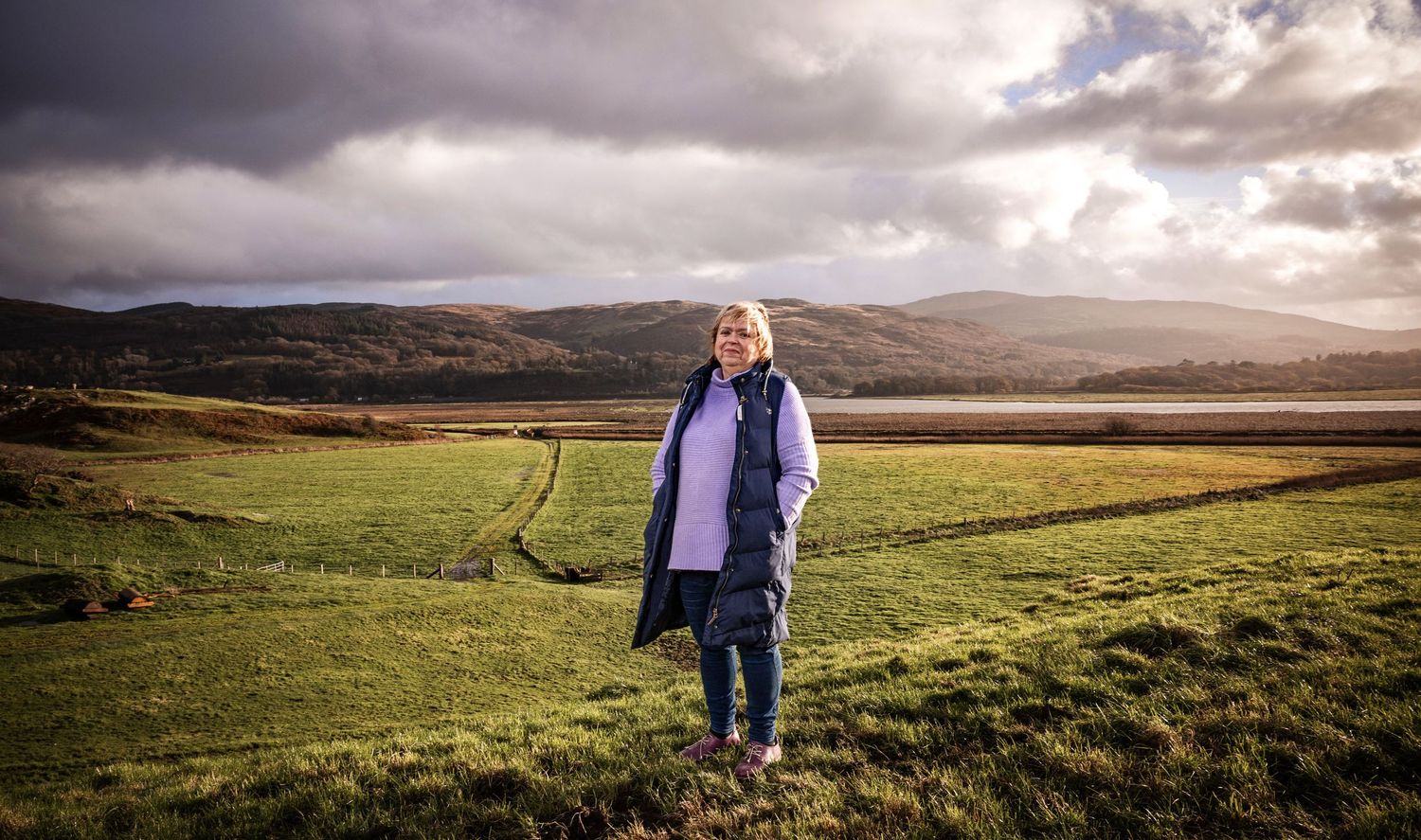
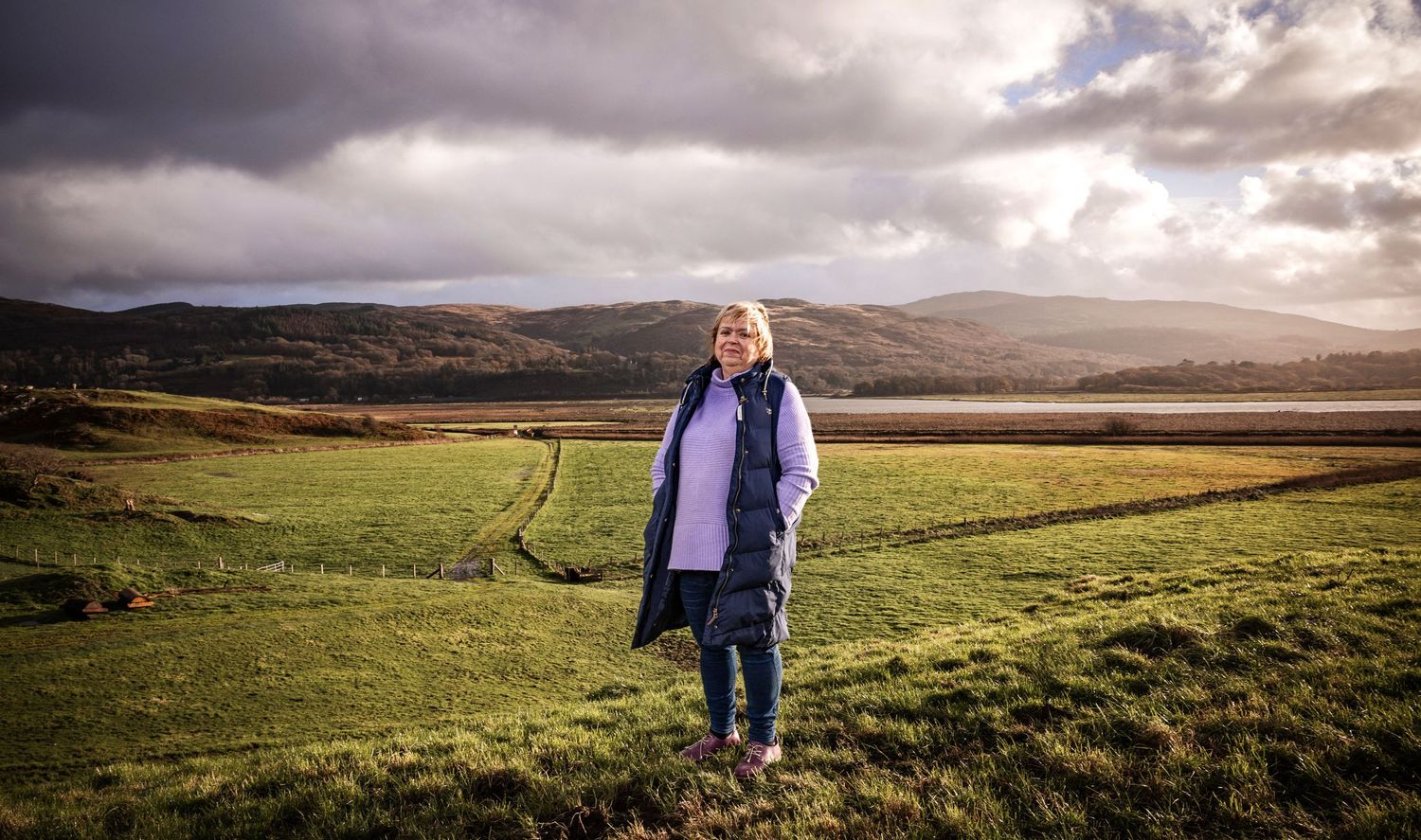
Eluned lives on a farm overlooking the Dyfi Estuary, in a wonderfully exposed spot where the views are spectacular — and the wind has absolutely no respect for portrait photographers.
We headed out to the banks for a few photographs, but the weather had other ideas. The wind was howling, Eluned’s hair was blowing across her face, and my light stands were having a serious discussion with gravity. At one point, my off-camera light actually went flying in the wind. Thankfully, there was no irreparable harm done to either human or machine!
Eluned understandably preferred to keep her hood up, which wasn’t quite the look I’d had in mind. I was trying to create a portrait that captured something of her and the landscape around her, while battling the elements and attempting to keep my equipment in roughly the same place.
I’m very grateful to Eluned for humouring me. It takes a good deal of patience to stand in a gale while a photographer fiddles with lights and asks you to turn your head just a little this way or that. The conditions were certainly challenging, but they were also a reminder that life in this landscape means living with the weather, rather than expecting it to cooperate.
Sometimes, getting the photograph is as much about persistence — and a little luck — as it is about the light.
Bronwen and Flo: Friendship, memories and a remarkable painting
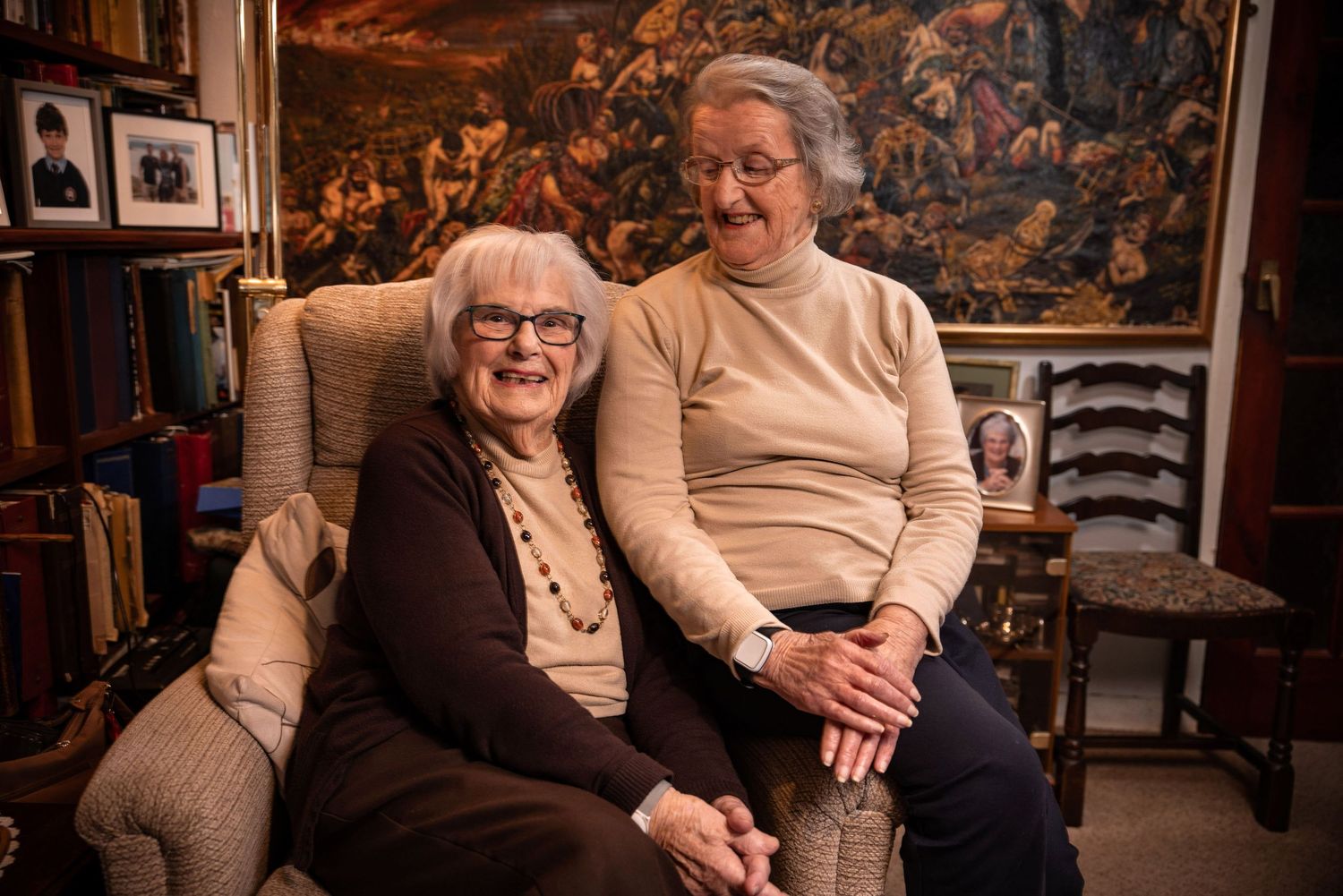
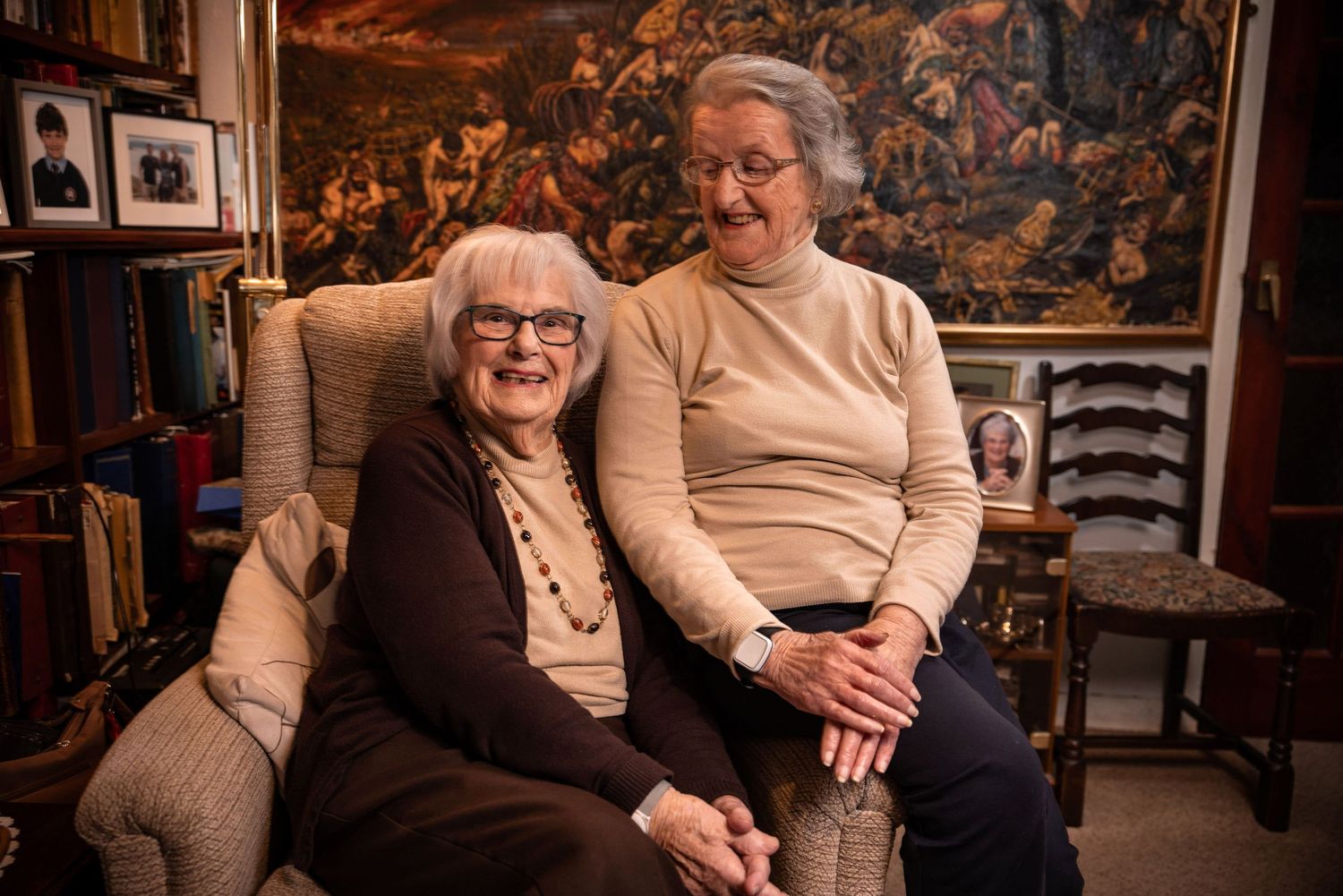
One of the most special sessions of the project was with Bronwen and Flo, two lifelong friends in their nineties who live in Aberdyfi.
Rather than battle the weather outside, we photographed them in Bronwen’s front room, in front of a huge painting by her late husband, Stan Hugill.
The painting itself was fascinating. Stan painted it while he was a prisoner of war during the Second World War. He later became well known as a singer, writer and authority on traditional sea shanties, helping to preserve the songs and stories of sailors.
Having this piece of history hanging in the room added another layer to the portrait. It connected the people in front of my camera with the wider maritime history of the area, making the setting feel much more meaningful than a simple indoor backdrop.
But what made the session really memorable was Bronwen and Flo themselves. They were full of laughter, stories and a wonderful sense of perspective. Spending time with them was a privilege, and I found myself listening just as much as I was photographing.
Portrait photography is often described in terms of lighting, composition and camera settings, but some of the most important ingredients have very little to do with equipment. Making people feel comfortable, giving them time and allowing their personalities to come through can make all the difference.
With Bronwen and Flo, the warmth and friendship between them were impossible to miss. I wanted the photographs to reflect that connection, along with the history and character of the room around them.
It was a lovely reminder that every portrait tells a story, and sometimes the stories that emerge while you're setting up the camera are just as valuable as the photographs themselves.
Geraint Jenkins: The cow that understood the assignment
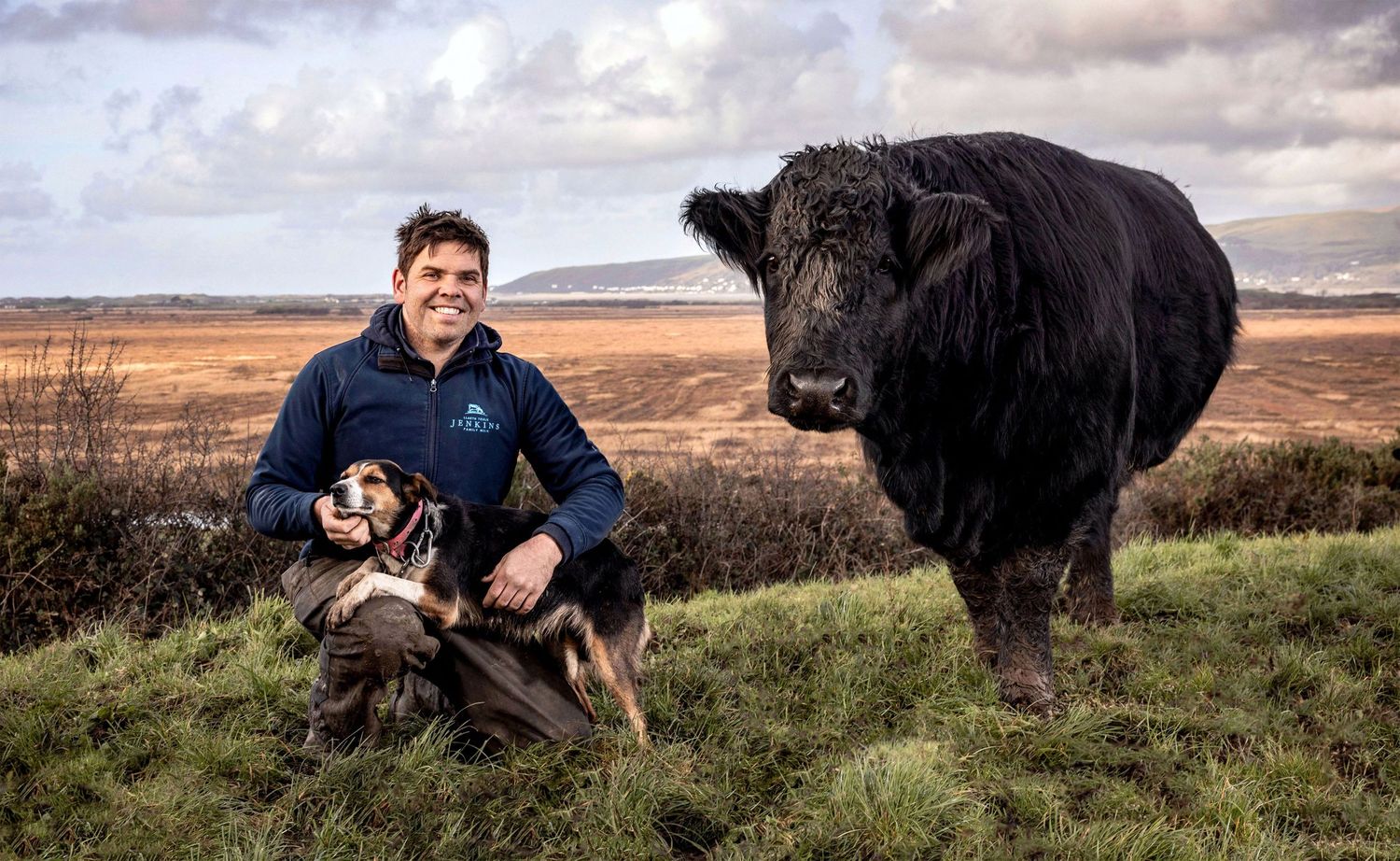
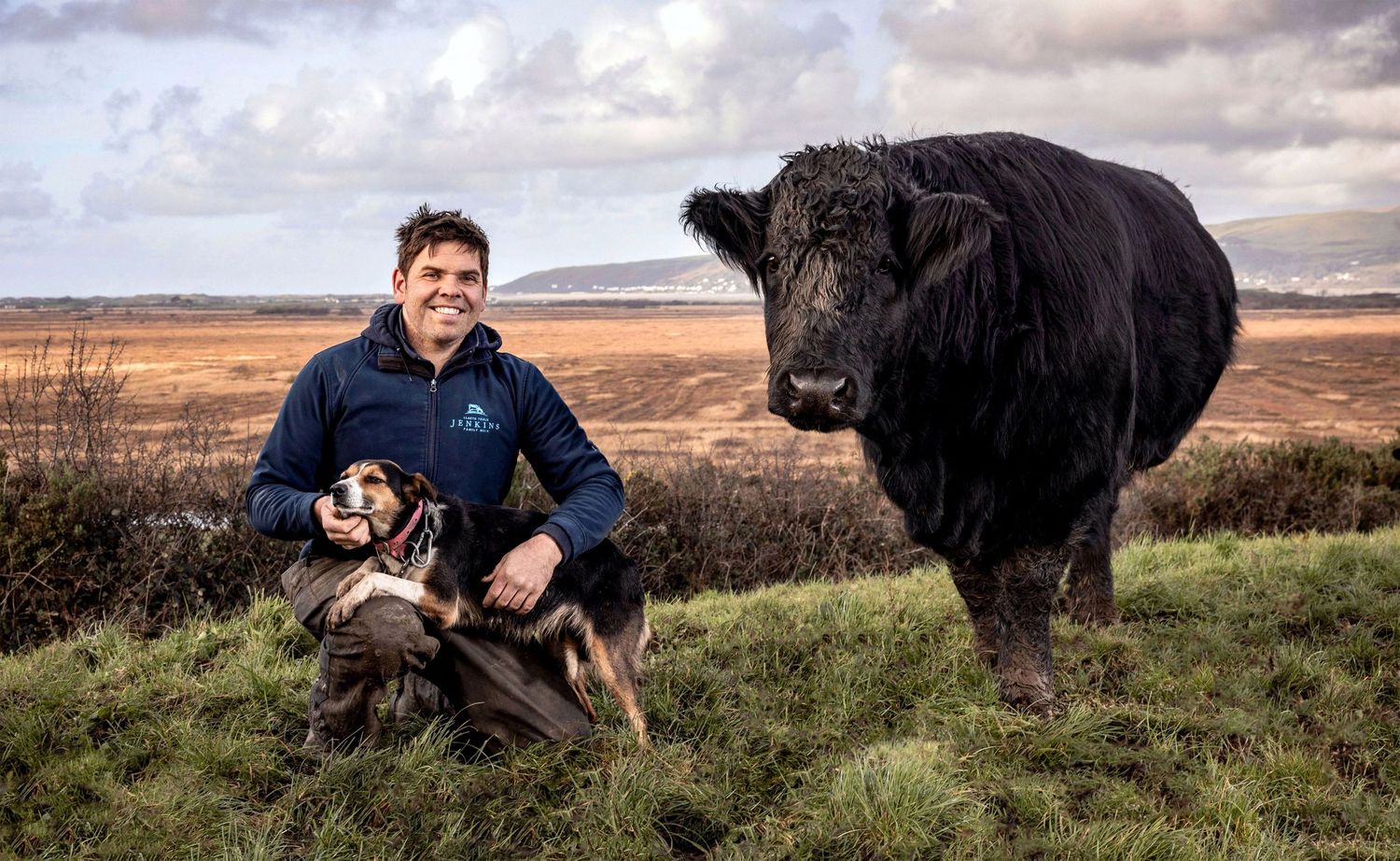
Geraint Jenkins farms on a family farm overlooking the Borth coast and its surrounding marshlands.
For his portrait, we wanted to include some of the Welsh Black cattle, which felt entirely appropriate for a project celebrating the people and landscapes of the Dyfi Valley.
Simple enough, you might think. Find a farmer, find some cows, take a photograph.
Except cows, as it turns out, aren't particularly interested in your creative vision.
We spent a couple of hours trying to persuade them to cooperate. Food was offered. Encouragement was given. Various attempts were made to arrange the scene. The cattle, meanwhile, seemed to have their own agenda and absolutely no intention of following mine.
They were, frankly, divas.
Eventually, most of the herd decided they'd had enough and wandered off, leaving one cow behind. Then, for a brief and glorious moment, this particular animal looked directly down the lens.
And there it was.
A couple of seconds of perfect eye contact, with just the right expression. The cow had effectively delivered its own version of Zoolander's famous “Blue Steel” look.
I knew the shot was in the bag.
Of course, once I'd captured the moment, I tried to recreate it. No chance. The cow had apparently fulfilled its contractual obligations and was not prepared to repeat the performance.
It's funny how often photography works like this. You can spend ages planning a shot, carefully considering the composition and arranging everything just so, only for the best moment to happen unexpectedly — and last barely long enough to press the shutter.
The resulting portrait brought together Geraint, his farm and the cattle in a way that felt true to the landscape and the life being lived there. It also provided one of the most entertaining moments of the whole commission.
I came away with a renewed appreciation for Welsh Black cattle, and a strong suspicion that at least one of them could have a future in front of the camera.
Jill Hulse: A walk on Ynyslas beach
The final portrait was of Jill Hulse, a local resident of Ynyslas.
We photographed her on Ynyslas beach, a place she regularly visits for walks with her lovely old dog, Ruby. It was a fitting location for a project focused on the connections people have with their surroundings.
We began with a few photographs of Jill and Ruby together. There was something very natural about seeing them in a place that was already part of their everyday lives. Rather than asking Jill to pose somewhere unfamiliar, we could use the beach and coastline as the setting for a portrait that felt personal to her.
After a while, we put Ruby back in the car so she could stay warm while we carried on with a few portraits of Jill on her own.
The coastline gave us a beautiful backdrop, and I wanted to make sure that the landscape remained part of the story without overwhelming the person in front of the camera.
By this stage, I was getting used to the particular challenges of photographing people outdoors in late-November weather. There was always a balance to be found between working with the conditions, keeping everyone comfortable and getting the images we needed.
What I liked about Jill's session was its simplicity. The beach was somewhere she knew and enjoyed, and that familiarity helped ground the portrait in her everyday connection to the area.
It was a lovely way to round off the six sessions, bringing the project back to the relationship between people and the places they call home.
Six portraits, countless stories
Looking back on the project, what stays with me isn't just the finished photographs. It's the people I met, the conversations we had and the different ways each person connected with the Dyfi Valley.
From Caroline on the beach at sunset to Charlie sheltering from a storm aboard Mikatcha, from Eluned battling the gale to Bronwen and Flo sharing memories beneath a remarkable painting, every session brought something different.
Geraint's unexpectedly camera-ready cow certainly provided some comic relief, while Jill's portrait on Ynyslas beach was a reminder of how closely our favourite places can become woven into everyday life.
The weather made things interesting, to say the least. There were moments when the wind seemed determined to send my equipment into the next county, and occasions when the sensible option was to retreat indoors or come back another day. But those challenges were also part of photographing this particular landscape. The coast is shaped by the elements, and working there means learning to adapt.
More importantly, the commission reminded me why I enjoy portrait photography so much. A portrait is never just about what someone looks like. It's about who they are, where they belong and the experiences that have helped shape them. Bringing the surrounding landscape into the frame can add another layer to that story.
That's what made working on Changing Tides so rewarding. These six people have their own lives, histories and relationships with the Dyfi Valley, but together their stories help build a richer picture of the area and the importance of looking after it.
I'm grateful to everyone who gave their time, welcomed me into their world and put up with the occasional battle against the Welsh weather.
And to the cow who gave me two seconds of perfect eye contact: thank you. You know who you are.
You can explore all six portraits and read the accompanying interviews on the Changing Tides website.